Unlocking Creative Potential: How Puzzles Stimulate Innovative Problem Solving
Exploring the Multifaceted Benefits of Puzzles
Puzzles have been part of human entertainment for centuries, and their allure remains undiminished. However, their relevance transcends mere amusement. Engaging in puzzle-solving activities can profoundly enhance cognitive abilities and catalyze creative thinking. As we delve into this topic, we uncover the significant ways in which puzzles can stimulate innovative problem-solving.
One of the most compelling advantages of puzzles is their ability to enhance critical thinking. When facing a crossword or a Sudoku challenge, individuals are prompted to think analytically and creatively. For instance, in solving word puzzles, one must consider not just the obvious answers but also make educated guesses based on letter patterns and constraints. Such mental workouts train the brain to approach problems with a flexible mindset, essential for success in today’s complex scenarios.
Another notable benefit is that puzzles often foster collaboration. Whether it’s a jigsaw puzzle that requires teamwork to piece together or a collaborative crossword-solving session with friends, these activities can build stronger relationships. In group settings, individuals learn to communicate effectively and share insights, embodying the spirit of cooperation and collective problem-solving. This dynamic is particularly valuable in professional environments, where teamwork is essential for project success.
Puzzles also teach the value of persistence. When faced with a particularly challenging puzzle, the instinct to give up can be strong. However, pushing through the frustration can yield a sense of accomplishment and boost resilience. For example, many individuals report that completing a complex jigsaw puzzle not only improves their mood but also instills a sense of determination that translates to other life areas, such as academics and career pursuits.
The variety of puzzles available is staggering—from traditional crosswords and jigsaw puzzles to modern digital puzzle games. Each type presents unique challenges that can lead to enhanced cognitive function and creative thought. It has been suggested by research that regular engagement with these brain games correlates with improved problem-solving skills and a notable increase in creative output.
The art of solving puzzles encourages a shift in perspective, urging individuals to view challenges through different lenses. This adaptability is crucial in a fast-paced world where conventional problem-solving strategies can sometimes lead to stagnation. Embracing puzzles as a fundamental aspect of mental exercise can unlock new pathways of thought, fostering innovation and creativity.
Ultimately, the journey of tapping into your creative potential may just lie within the pieces of your next favorite puzzle. Whether you are tackling a logic puzzle alone or collaborating with others on a complex challenge, the process is not just about arriving at the solution but engaging with the experience of problem-solving itself. Embrace the puzzle phenomenon, and you may discover a world of transformative possibilities waiting to be unlocked.
DISCOVER MORE: Click here to learn how puzzles boost problem-solving skills
The Cognitive Mechanics Behind Puzzle Solving
To truly appreciate the impact of puzzles on creative problem-solving, it’s essential to understand the cognitive mechanics involved in puzzle-solving activities. When individuals encounter a puzzle, they engage in a range of mental processes that facilitate not only the pursuit of the solution but also broader cognitive benefits.
First, the act of puzzling stimulates visual-spatial reasoning. This cognitive skill enables individuals to manipulate and interpret visual information, which is critical when piecing together jigsaw puzzles or navigating mazes. Research indicates that strong visual-spatial skills correlate with enhanced performance in fields such as architecture, engineering, and even art. Engaging with puzzles helps develop these faculties by compelling the solver to visualize relationships between pieces and anticipate how changes will affect the overall image or outcome.
The next key element is logical reasoning. Each puzzle embodies a unique set of rules or constraints, and solving these can significantly hone an individual’s logical thinking. Take Sudoku, for example: solvers must deduce relationships between numbers while adhering to specific guidelines. This encourages a systematic approach to decision-making that can be directly applicable to professional environments, aiding individuals in making informed, strategic choices.
Moreover, working through puzzles often involves a blend of cognitive styles, primarily convergent and divergent thinking. Convergent thinking focuses on deriving a single, correct solution from a set of established rules, while divergent thinking encourages the generation of multiple possible solutions. Engaging both cognitive approaches allows for a richer problem-solving experience, fostering a mindset that is both creative and analytical. This equilibrium is vital in today’s dynamic job market, where innovative solutions are highly sought after.
The Role of Emotions in Puzzle Solving
Interestingly, the emotional experience tied to solving puzzles can also be a powerful catalyst for creative potential. The satisfaction and joy derived from completing a challenging puzzle can release dopamine, a neurotransmitter linked to motivation and pleasure. This positive reinforcement not only enhances the immediate experience but also encourages a person to seek out additional challenges. A sense of achievement can lead to increased confidence, which, in turn, may inspire individuals to approach problems in their professional or personal lives with greater enthusiasm and creativity.
Most importantly, puzzles foster a unique environment where failure is not only accepted but often celebrated. The iterative process of trying different strategies and learning from mistakes is crucial for innovation. Consider this: the great inventor Thomas Edison famously stated, “I have not failed. I’ve just found 10,000 ways that won’t work.” This attitude is mirrored in puzzle-solving, where the path to success is frequently riddled with trial and error, teaching the solver invaluable lessons about persistence and adaptability.
Ultimately, the intersection of cognitive skills, emotional engagement, and the iterative nature of puzzle-solving outlines a powerful framework for unlocking creative potential. Engaging with various forms of puzzles sets the stage for individuals to enhance their innovative problem-solving capabilities, offering endless opportunities for mental growth and discovery.
Unlocking Creative Potential: How Puzzles Stimulate Innovative Problem Solving
Engaging in puzzles, whether they are jigsaw puzzles, crosswords, or brain teasers, fosters an environment conducive to creative thinking. The very act of solving puzzles requires a unique combination of cognitive skills such as logical reasoning, pattern recognition, and spatial awareness, which all contribute to enhanced problem-solving abilities. By regularly challenging oneself with puzzles, individuals can effectively hone these skills, unlocking a reservoir of creative potential.
Neuroscientific research suggests that solving puzzles activates multiple areas of the brain that are responsible for reasoning and critical thinking. When presented with a complex puzzle, the brain works collaboratively to interpret the information, generate strategies, and explore various solutions. This creative process not only sharpens existing skills but can also lead to the development of new, innovative approaches to problem-solving.
Furthermore, the social aspect of puzzle-solving—whether it’s teaming up with friends or engaging in competitive puzzle-solving—can enhance creativity through collaboration. Brainstorming in a group allows for diverse perspectives, leading to the synthesis of different ideas and approaches. The synergy created during these interactions often leads to breakthrough innovations, as individuals feel encouraged to think outside the box.
Moreover, puzzles provide a safe space for trial and error. This experiential learning opportunity enables individuals to explore various strategies without the high stakes often associated with real-world problems. In this sense, the lessons learned through puzzle-solving can translate into real-life scenarios, enabling individuals to tackle challenges with renewed confidence and creativity.
| Category 1 | Category 2 |
|---|---|
| Cognitive Skill Enhancement | Puzzles develop vital skills like critical thinking and reasoning. |
| Innovative Collaboration | Working with others fosters diverse solutions and creativity. |
In conclusion, the ability to navigate complexity through puzzles provides invaluable experience that extends beyond the activity itself. As individuals engage with puzzles, they not only develop essential cognitive skills but also create pathways to innovative problem-solving strategies. This multifaceted approach to enhancing creativity ensures that the benefits of puzzle-solving ripple into various aspects of life, making it a transformative practice worth exploring.
DIVE DEEPER: Click here to enhance your memory skills
Puzzles as Tools for Team Building and Collaboration
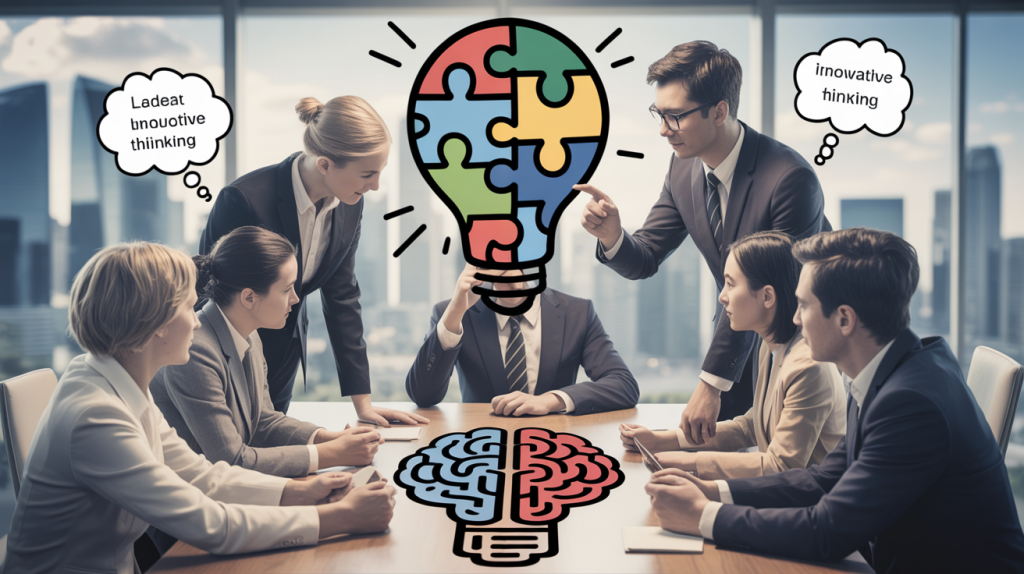
In addition to enhancing individual cognitive skills, puzzles serve as remarkable tools for fostering team building and collaboration. In today’s interconnected workplaces, the ability to work effectively with others is a critical component of problem-solving. Engaging in group puzzle-solving activities encourages effective communication, collective brainstorming, and the sharing of diverse perspectives—all essential elements of innovative problem-solving.
When teams tackle puzzles together, they often encounter situations that require negotiation and compromise. For instance, during a team-building retreat or workshop, a group may work on a large jigsaw puzzle or a complex escape room challenge. These experiences prompt team members to articulate their ideas, listen to one another, and develop consensus about the best strategies to employ. Such collaboration not only fosters camaraderie but also cultivates a culture of open-mindedness, where diverse viewpoints can contribute to a more comprehensive solution.
Moreover, puzzles in a group setting can highlight the unique strengths and weaknesses of individual team members. This diversity often leads to a richer creative outcome. Research conducted by the University of Minnesota indicates that groups benefit greatly from the inclusion of diverse problem-solving styles, where individuals with varying backgrounds bring different approaches to tackling challenges. This diversity of thought fuels creativity and allows for innovative solutions that a more homogenous group might not conceive.
Real-World Applications of Puzzles in Organizations
Puzzles are being integrated into corporate training programs and workshops for their multifaceted benefits. Many companies, including tech giants like Google and Airbnb, utilize puzzle-based exercises to promote innovation within their teams. These organizations understand that engaging employees in problem-solving tasks can enhance their ability to navigate complex challenges in their daily work environments.
For example, companies often run coding competitions or logic puzzle contests, where teams are tasked with coming up with innovative solutions to hypothetical scenarios. Not only do these activities help improve technical skills, but they also foster creativity and interpersonal relationships among team members. The pressure of a timed competition encourages participants to think outside the box and escalate collaboration, which leads to breakthroughs that can drive the company forward.
Furthermore, puzzles play a significant role in the field of education, highlighting the importance of nurturing creative problem-solving from a young age. Educators are increasingly incorporating puzzles into the classroom to engage students in critical thinking and collaborative learning. By working together on puzzles, students learn to appreciate the strength of teamwork and collaboration, setting a strong foundation for their future careers. Studies show that students who regularly participate in puzzle-based activities tend to demonstrate improved problem-solving skills and higher levels of creativity.
This trend underscores a fundamental truth: unlocking creative potential doesn’t rely solely on individual effort but thrives in environments that encourage collaboration and collective ingenuity. In a rapidly evolving world, embracing the puzzle-solving mindset—whether in corporate, educational, or personal spheres—can yield transformative results, empowering individuals and teams to rise to the challenges of the modern landscape.
DISCOVER MORE: Click here to learn about the benefits of puzzles
Conclusion
In conclusion, the role of puzzles as catalysts for unlocking creative potential cannot be overstated. They serve as engaging mediums through which both individuals and teams can enhance their cognitive skills and innovative problem-solving capabilities. As we’ve explored, puzzles foster critical thinking, instill collaboration, and encourage diverse perspectives that are essential in today’s dynamic environments—be it corporate settings or educational institutions.
The benefits of embracing a puzzle-solving mentality extend far beyond mere entertainment; they position individuals and teams to tackle complex challenges more effectively. Organizations like Google and Airbnb have recognized this value, integrating puzzle-based exercises into their training programs to cultivate a culture of creativity and teamwork. By engaging in collaborative puzzle-solving activities, team members not only learn to negotiate and communicate but also harness their unique strengths to create enriched solutions.
Moreover, the impact of puzzles in educational settings highlights the importance of nurturing these skills from an early age. As students collaborate to solve problems, they not only build endurance in critical thinking but also lay a strong foundation for future collaborative endeavors. This trend points toward a significant shift in how we view problem-solving: that it is not merely an individual pursuit, but rather a collective journey characterized by creativity and innovation.
As we navigate an increasingly complex world, it is essential to embrace approaches that prioritize teamwork and creative exploration. Puzzles offer a versatile platform to stimulate innovative thinking and problem-solving across various contexts, ensuring that individuals and organizations are well-equipped to meet the challenges ahead.
Related posts:
The Psychology of Play: How Cognitive Challenges Influence Creative Thinking
The Role of Puzzles in Enhancing Cognitive and Creative Flexibility
The Intersection Between Strategy Games and Creativity: A Case Study
Unraveling Enigmas: How Solving Puzzles Stimulates Original Thinking
The Art of Divergent Thinking: How Mind Games Foster Unconventional Solutions
Logic Games: How They Can Boost Your Creativity

Linda Carter is a writer and puzzle expert specializing in mind games, brain teasers, and cognitive challenges. With extensive experience helping individuals enhance their problem-solving skills and think critically, Linda shares her knowledge on our platform. Her goal is to empower readers with practical advice, engaging puzzles, and strategies to sharpen their minds and achieve success in the captivating world of mind games and puzzles.