The Role of Creative Thinking in Solving Complex Puzzles
The Power of Creative Thinking in Problem-Solving
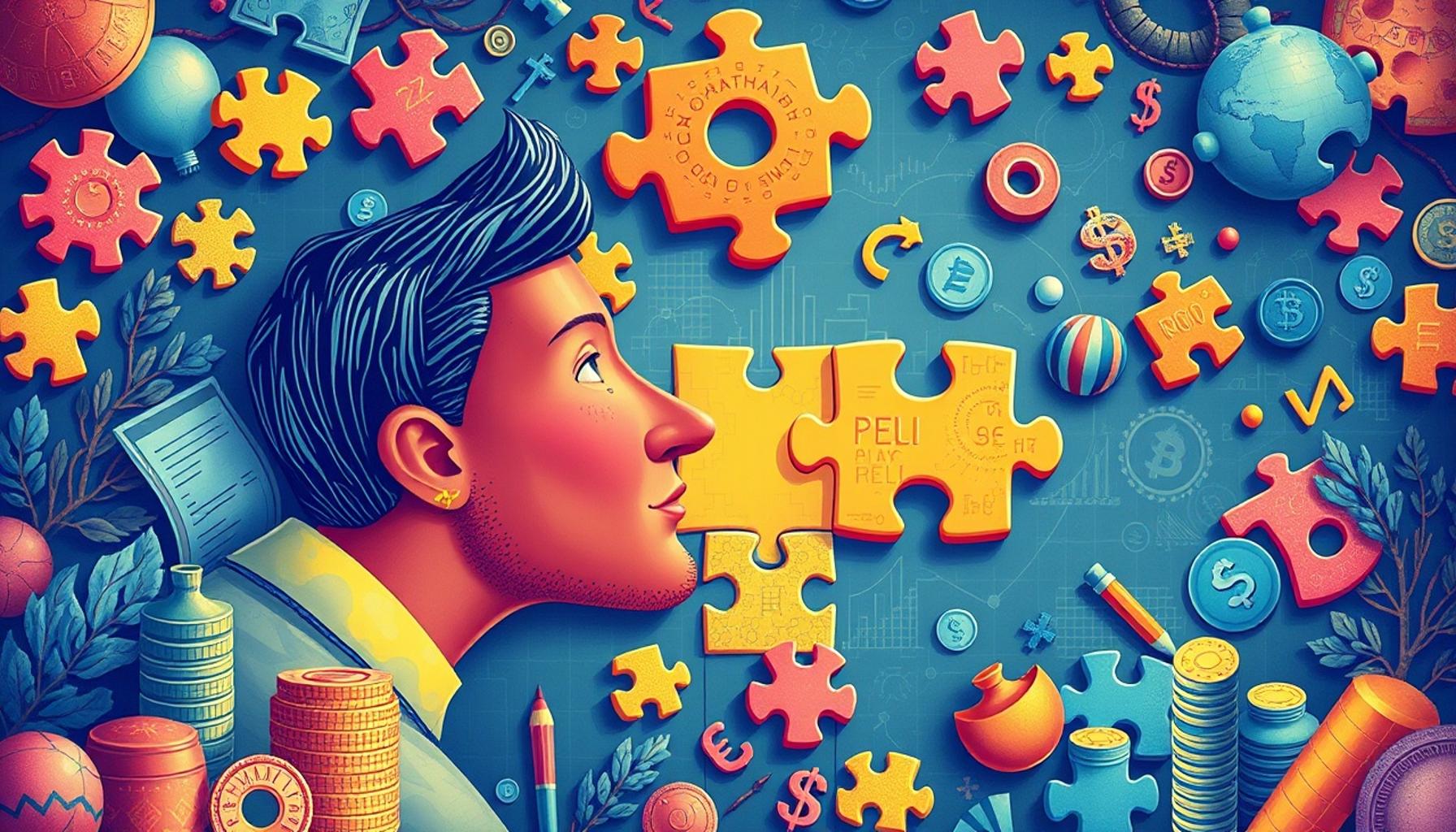
In our increasingly complex world, the capacity for creative thinking emerges as a vital skill that enables individuals to tackle multifaceted problems across various domains. Whether it’s solving intricate math problems, deciphering codes, or understanding complex narratives within literature and media, the ability to think innovatively unlocks new avenues for exploration. This skill is not limited to the realm of artistic endeavors; it significantly enriches logical reasoning and enhances analytical capabilities in all walks of life.
Consider, for example, the realm of crossword puzzles. These literary challenges often hinge on clues that may have double meanings or unexpected interpretations. A creative thinker might interpret a clue in an unconventional manner, revealing hidden connections that others may overlook. For instance, if a clue reads “risky business,” a standard response may be “gamble,” while a more inventive approach might lead one to consider “venture.” The ability to think outside the box can thus transform a tedious activity into a stimulating mental exercise.
Similarly, in logic games—which range from Sudoku to intricate grid puzzles—crafting unusual strategies can open doors to innovative solutions. For example, players might find success by manipulating the layout in unexpected ways, challenging conventional methodologies. This fresh perspective can lead not just to victory in the game, but also to enhanced cognitive skills that carry over into daily decision-making.
Escape rooms provide yet another fascinating arena for creative problem-solving. These immersive experiences require participants to work collaboratively, utilizing out-of-the-ordinary methods to unravel clues and unlock the next step. A team member might suggest using a reflective surface to read hidden messages, thereby promoting an atmosphere where shared creativity flourishes. This collaborative environment not only fosters teamwork but also cultivates leadership skills and adaptability.
Moreover, consider the application of creativity in tackling challenging mathematical problems. Traditional approaches might miss crucial patterns or alternative frameworks that could simplify the problem at hand. For instance, envisioning mathematical equations as part of a visual story can help students grasp complex concepts in a more relatable manner. This innovative perspective encourages learners to engage with mathematics beyond rote memorization, igniting a deeper understanding of the subject.
Engaging in these activities invites individuals to push beyond traditional parameters. Each puzzle or challenge presents an opportunity for growth and discovery. As we navigate the exhilarating intersection of creativity and logic, we unlock fascinating possibilities that greatly enrich the human experience and invite us to delve deeper into the world around us.
By embracing the transformative power of creative thinking, we not only enhance our problem-solving abilities but also advocate for a mindset that values exploration, collaboration, and innovation. Join us on this journey of discovery as we uncover the profound impact of creative thought on logical challenges and the broader implications for society.
DIVE DEEPER: Click here to uncover more about creativity-boosting logic games
Unleashing Creativity: The Key to Mastering Complex Puzzles
The intricacies of crossword puzzles, logic games, and other cognitive challenges are a testament to the power of creative thinking. Not only do these activities stimulate our brains, but they also serve as a litmus test for one’s ability to innovate and adapt. When faced with a complex puzzle, thinking creatively can be the difference between stagnation and breakthrough. It invites a departure from conventional methods and inspires a reimagining of possible solutions, which is critical in unraveling multifaceted conundrums.
To appreciate the role of creative thinking in tackling difficult puzzles, it is essential to understand the ability to recognize patterns, make connections, and generate alternative pathways. Here are some key benefits of integrating creative thinking into the problem-solving process:
- Diversifying Solutions: Employing creative thought allows solvers to branch out from traditional methods, discovering new routes for resolution. This diversity in approach can be especially invaluable in more intricate challenges.
- Enhancing Pattern Recognition: Creative thinkers often observe relationships between seemingly unrelated elements, enhancing their ability to identify patterns or hints that would typically go unnoticed. This skill is vital in logic games like Sudoku.
- Boosting Confidence: A creative mindset nurtures a sense of confidence and resilience. When individuals embrace various tactics, they develop a greater comfort level in exploring uncharted territories, ultimately reducing anxiety related to problem-solving.
- Fostering Collaboration: The collaborative nature of many creative endeavors opens up avenues for teamwork. Engaging with others introduces fresh ideas and new perspectives that drive innovative solutions.
Consider the example of escape rooms. These immersive scenarios have gained popularity as interactive entertainment that challenges participants to utilize both logical reasoning and creative thinking. Teams must communicate effectively and approach each clue with an inventive mindset, often discovering that the most successful outcomes arise from unconventional strategies. Using tools within the room resourcefully—like a flashlight to reveal hidden messages or a code wheel to decipher combinations—reflects the profound impact of creative problem-solving.
In an educational context, the importance of fostering creativity in subjects such as mathematics cannot be overstated. Traditional pedagogical approaches often introduce formulas and equations without context, which can disengage students. However, by encouraging a creative lens through which to view mathematical concepts—such as using storytelling to explore equations—educators can spark a genuine interest in students, leading to more profound engagement and understanding.
As we delve deeper into the role of creative thinking in solving complex puzzles, it becomes clear that this cognitive flexibility not only enhances our abilities but also cultivates a richer, more nuanced perspective of the challenges we face. Join us as we continue to explore specific methodologies and practices that amplify the role of creativity in unlocking the secrets of intricate dilemmas.
Creative thinking plays a vital role in the process of solving complex puzzles, as it allows individuals to approach problems from novel angles. By fostering imagination and encouraging unique ideas, creative thinking empowers individuals to break free from conventional approaches that often hinder problem-solving. Research indicates that those who engage in creative thought tend to explore a wider range of possible solutions, which can lead to breakthroughs in understanding intricate puzzles.
Moreover, the integration of intuitive insights into logical reasoning often results in enhanced problem-solving abilities. When faced with a stiff challenge, a creative thinker will not merely apply standard methodologies; instead, they combine various thought processes to discover solutions that may not be immediately apparent to others. This blend of creativity and analytical thinking is essential for tackling multifaceted puzzles, whether they involve mathematical concepts, strategic planning, or artistic expression.
Additionally, creative thinking encourages collaboration and the sharing of ideas among diverse groups. In settings where individuals with different backgrounds and skill sets come together, the likelihood of encountering innovative solutions increases substantially. Each person’s unique perspective contributes to a richer pool of ideas, which can illuminate pathways to solving complex issues that may have seemed insurmountable when approached in isolation.
The impact of technology on creative thinking cannot be overlooked either. With the advent of advanced tools and platforms designed to enhance creative capacity, individuals are better equipped to brainstorm and visualize possible solutions. This technological synergy serves as a catalyst, stimulating fresh ideas and approaches that lead to successful problem resolution.
| Advantages of Creative Thinking | Impacts on Puzzle Solving |
|---|---|
| Enhanced Problem-Solving Abilities | Facilitates exploration of innovative solutions beyond conventional methods. |
| Collaboration Boost | Encourages teamwork, leveraging diverse skill sets for richer problem-solving. |
| Technological Synergy | Utilizes advanced tools to visualize and generate creative solutions. |
Understanding the role of creative thinking in solving complex puzzles invites individuals and organizations alike to embrace flexibility in their thought processes. The more open one is to different perspectives and ideas, the closer they will get to unraveling the intricacies of challenging problems. It is through this lens of creative exploration that new avenues for innovation and understanding are established.
DISCOVER MORE: Click here to dive deeper
Innovative Strategies for Cultivating Creative Thinking
To harness the potential of creative thinking in solving complex puzzles, one must actively engage in practices that nurture and spur innovation. Creativity is not a static trait; rather, it is a dynamic skill that can be developed through various strategies. Below are some methodologies that can help individuals enhance their creative problem-solving abilities:
- Mind Mapping: This technique enables solvers to visualize their thoughts, establishing connections between disparate ideas. By sketching out a mind map, individuals can generate a spectrum of possibilities and solutions that may not be immediately apparent through linear thinking. The ability to see relationships in a broader context often leads to breakthrough moments in puzzle-solving.
- Brainstorming Sessions: Collaborative brainstorming can ignite a chain reaction of innovative ideas. Whether working in a group or individually, setting aside time to freely express thoughts—without judgment—cultivates a space for experimentation. In solving intricate puzzles, even the wildest ideas can pivot towards feasible solutions.
- Incorporating Different Disciplines: Blending insights from various fields can fuel creativity. For example, incorporating principles from art or music into puzzle-solving can offer a fresh perspective. This interdisciplinary approach breaks down mental barriers, leading to unique problem-solving techniques that can address complex challenges.
- Emphasizing Playfulness: Embracing a playful attitude can dramatically enhance creativity. Activities that induce joy or curiosity—such as games or improvisational theater—can loosen rigid thought patterns. This sense of play encourages an open-minded approach, allowing individuals to explore unexpected avenues when faced with a puzzle.
Another compelling factor that underscores the significance of creativity is its direct correlation with emotional intelligence. Trained in self-awareness and empathy, emotionally intelligent individuals can navigate the emotional landscape of collaborative puzzle-solving. They foster an environment where ideas can flow uninhibitedly, leading to synergistic solutions that benefit the entire team. For instance, individuals who can read non-verbal cues during discussions often grasp when to pivot their strategy or encourage quieter teammates to voice their innovative thoughts.
The Role of Technology in Enhancing Creative Thinking
In today’s digital era, technology serves as both a challenge and an advantage in the realm of creative thinking. Various applications and platforms facilitate creative problem-solving, offering puzzles and games designed to sharpen cognitive abilities. These interactive puzzle games, available on smartphones and computers, transform conventional learning into engaging experiences. Players learn to adapt quickly, react to new information, and think creatively—skills that are transferable to real-life scenarios beyond the gaming screen.
Furthermore, the rise of virtual reality (VR) environments offers a novel dimension for solving puzzles. Immersive experiences allow participants to explore complex scenarios, enhancing engagement and stimulating creative thought. These environments foster critical thinking as users manipulate their surroundings, offering new dimensions to problem-solving that are not yet possible in traditional formats.
Moreover, accessing online platforms dedicated to puzzle-solving communities invites a collaborative spirit. Individuals can exchange techniques and share unique approaches, reinforcing the notion that creative thinking flourishes through connection and conversation.
As we explore the depths of creative thinking in intricate puzzle-solving, it becomes increasingly evident that the fusion of innovative techniques and technology paves the way for not only solving puzzles but also for tackling the complex challenges of everyday life. The potential to reinvent solutions rests within our capacity for creativity, inviting us to push boundaries and think beyond the conventional.
DISCOVER MORE: Click here to unlock new strategies
Conclusion: Unlocking the Potential of Creative Thinking
In the intricate dance of solving complex puzzles, creative thinking emerges as a crucial ally. It empowers individuals to approach challenges from multifaceted angles, allowing for the exploration of unconventional solutions. The methodologies highlighted throughout this article—such as mind mapping, brainstorming, and interdisciplinary collaboration—underscore that creativity is not merely an inherent talent but a skill that can be intentionally developed.
As we navigate the labyrinth of modern problem-solving, the integration of technology further amplifies our creative potential. From engaging puzzle apps to immersive virtual environments, technology provides tools that encourage innovative thinking and adaptability. This synergy between technology and creativity not only enhances our ability to tackle intricate puzzles but also prepares us for the unpredictable challenges of the real world.
Moreover, recognizing the interplay between emotional intelligence and creative thought opens doors to collaborative problem-solving. Individuals equipped with emotional awareness can create an atmosphere conducive to idea sharing, ensuring that all voices contribute to the solution. This collaborative spirit leads to richer, more nuanced outcomes.
In conclusion, as we cultivate our creative thinking skills, we not only improve in our puzzle-solving endeavors but also equip ourselves with vital life skills. By embracing playfulness, employing innovative strategies, and utilizing the tools available to us, we can unlock new dimensions of thought and innovation, transforming the way we navigate the complexities of our everyday lives. The journey of discovery awaits—are you ready to explore the possibilities?
Related posts:
Developing Creativity Through Mental Challenges and Puzzles
The Importance of Puzzles in Stimulating Creative Thinking
Unraveling Enigmas: How Solving Puzzles Stimulates Original Thinking
The Psychology of Play: How Cognitive Challenges Influence Creative Thinking
Visual Puzzles: How Image Puzzles Stimulate Visual Creativity
Unlocking Creative Potential: How Puzzles Stimulate Innovative Problem Solving

Linda Carter is a writer and puzzle expert specializing in mind games, brain teasers, and cognitive challenges. With extensive experience helping individuals enhance their problem-solving skills and think critically, Linda shares her knowledge on our platform. Her goal is to empower readers with practical advice, engaging puzzles, and strategies to sharpen their minds and achieve success in the captivating world of mind games and puzzles.