The Influence of Social Interaction in Group Puzzle Solving on Memory Recall
Understanding the Impact of Collaborative Efforts on Memory
In the realm of cognitive psychology, the intricate relationship between social interaction and memory recall has become a focal point for researchers. Particularly illuminating is the examination of group activities like puzzle solving. Engaging in such collaborative endeavors not only enhances social bonds but also significantly influences how we remember and process information.
Collaboration in a group setting brings a multitude of benefits, each of which plays a role in memory retention:
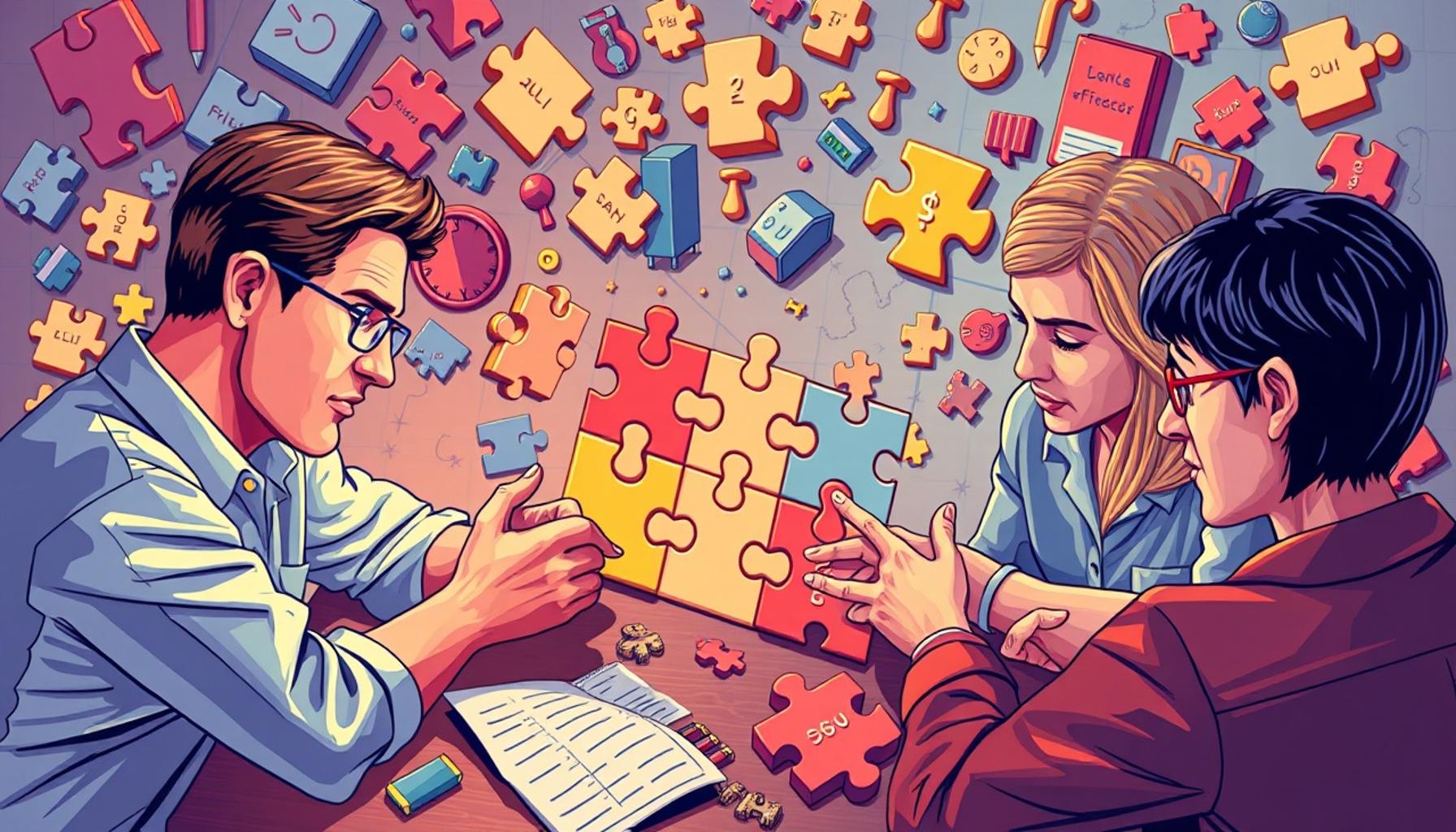
- Shared Knowledge: Each participant arrives with unique perspectives and approaches towards solving the puzzle. For example, in a team of four working on a jigsaw puzzle, one person might excel at visualizing the overall picture, while another may have a talent for connecting smaller pieces. This sharing of insights fosters a rich environment for cognitive growth, as individuals can learn from one another and reinforce their understanding.
- Enhanced Engagement: Actively working together on a task captures the attention of all participants. This engagement helps maintain focus and interest. A 2021 study published in the “Journal of Experimental Psychology” found that individuals who participated in group activities were more likely to stay attentive and motivated, leading to greater accomplishment and retention of information.
- Reduced Cognitive Load: When the responsibility for solving a problem is shared among group members, each individual can dive deeper into a specific aspect of the task. For instance, if a group is solving a complex crossword puzzle, some may focus on word meanings while others concentrate on pattern recognition, allowing for a more comprehensive approach to the solution.
Initial research has demonstrated that collaborative problem-solving expands memory recall abilities. This discovery invites us to consider several vital questions such as:
- Does the dialogue exchanged during collaboration facilitate better encoding of information into memory?
- Are memories more solidified through extensive group discussions and feedback mechanisms?
- What influence does social bonding have on information retention and recall?
As further investigations unfold, it becomes apparent that social interactions during group puzzle-solving scenarios are not mere distractions; rather, they are instrumental in shaping our cognitive experiences. The implications of these findings extend beyond casual games or social settings, reaching into classrooms, workplaces, and other environments where teamwork is essential.
For educators, these insights could reshape teaching strategies, as collective learning could be emphasized in subjects where retention of information is critical. Similarly, teams in corporate settings might find that cooperative problem-solving bolsters both productivity and individual memory, enhancing teamwork and fostering innovation.
In summary, the evidence suggests that collaborative interactions significantly affect memory recall. By exploring this dynamic, we can unlock new strategies to improve learning and team effectiveness across various fields.
Unpacking the Mechanisms Behind Group Collaboration and Memory
As we dive deeper into the effects of social interaction on memory recall within group puzzle-solving activities, it is essential to understand the psychological mechanisms that underpin these benefits. Research indicates that the synergy created through collaboration not only enhances our enjoyment of tasks but also activates cognitive pathways critical for memory formation and retrieval.
One of the primary components related to social interaction and memory recall is the phenomenon known as social facilitation. This concept refers to the tendency for individuals to perform better on tasks when they are in the presence of others. When engaged in a group setting, the collective atmosphere can spark a heightened desire to contribute, thus promoting individual focus. A notable example is how participants in a group puzzle-solving session often display increased enthusiasm and a renewed sense of purpose when navigating challenging parts of the puzzle.
Moreover, one cannot overlook the critical element of communication. The dialogues that transpire during collaborative efforts serve as crucial anchors for memory encoding. Verbal interactions allow participants to articulate thoughts, pose questions, and exchange ideas, ultimately improving information retention. Studies show that through discussion, individuals can clarify misunderstandings, stimulate more profound thought, and aid each other in recalling pertinent information. This shared dialogue enhances the ability to lock information in our memories as it engages various cognitive faculties.
- Reminders and Cues: When people work together on puzzles, they naturally remind each other of steps taken or strategies considered, acting as cues for memory retrieval. This can be especially beneficial in complex scenarios where individuals might struggle to connect pieces of information independently.
- Emotional Support: Engaging with others can generate an emotional uplift. Positive group dynamics often foster an environment where participants feel comfortable exploring new ideas, minimizing anxiety and enhancing clarity. This environment can lead to stronger memory traces due to reduced stress.
- Constructive Feedback: Social interactions provide essential feedback that can reinforce learning. When participants offer insights or corrections, it not only aids problem-solving but also enables individuals to reprocess information, further embedding it in memory.
The positive outcomes stemming from collaborative puzzle-solving extend beyond mere social bonding; they speak to a fundamental aspect of how we learn and retain information during social constructs. Groups functioning with a clear sense of collective responsibility harness cognitive resources more effectively than isolated efforts, suggesting that memory recall is not just an individual endeavor, but a shared experience molded by interaction.
As we continue to refine our understanding of group dynamics in memory recall, it becomes evident that the influence of social interactions in collaborative settings can reshape not only our personal experiences but also overall strategies in educational and corporate environments. Further exploration of these interactions may lead to novel approaches for enhancing group efficiency, enrich learning strategies, and improve outcomes in various social formats.
The Impact of Collaborative Strategy on Memory Retention
When individuals engage in group puzzle solving, the social dynamics at play can significantly enhance their ability to recall information. One major aspect of this phenomenon is the collaborative strategy employed by participants. As groups communicate and share ideas, they activate diverse cognitive processes that contribute to stronger memory formation. The repetition of information through discussion, coupled with the diverse input from different perspectives, leads to deeper processing. This collaboration not only aids in immediate recall but also lays the foundation for stronger long-term memory retention.Additionally, studies have illustrated that the factor of social motivation plays a crucial role in memory recall during group activities. When participants are part of a supportive team, they tend to feel more enthusiastic and engaged, which in turn stimulates better cognitive performance. The social pressure and encouragement within the group can lead individuals to strive harder for accuracy and clarity, ultimately enhancing the overall puzzle-solving experience.Moreover, the emotional aspects tied to social interaction cannot be overlooked. Positive social exchanges, such as laughter and encouragement, can elevate one’s mood, which has been linked to improved cognitive function. This emotional uplift can be a vital element in how effectively individuals recall information related to the puzzles they are working on. In essence, the intricate interplay of collaboration, motivation, and emotional support highlights the profound influence of social interactions in group puzzle solving, ultimately leading to enhanced memory recall outcomes.
The Role of Diverse Perspectives in Enhancing Memory Recall
In the realm of group puzzle-solving, the significance of diverse perspectives cannot be overstated. When members of a group come from varied backgrounds, experiences, and thought processes, a rich tapestry of ideas emerges, contributing further to improved memory recall. This diversity can ignite creative problem-solving approaches that an individual might not consider alone, elevating the collective intelligence of the group.
One of the primary benefits of this diversity is the introduction of alternative solutions. For example, in a recent study conducted at a university in California, students assigned to diverse teams were found to outperform homogenous groups in problem-solving tasks. The varied viewpoints enabled them to pool their knowledge and tackle challenges more creatively. This collaborative strategy not only enriches the puzzle-solving experience but also leads to stronger memory retention as individuals associate new solutions with their peers’ inputs.
Additionally, the exposure to different cognitive styles can significantly aid memory processes. Participants in group settings often employ a technique known as cognitive elaboration, wherein they not only process information but build upon it by integrating insights from their teammates. This interplay fosters deeper understanding and long-term memory formation since information becomes intertwined with multiple associations. In essence, when participants articulate their unique insights, they help their peers make connections that strengthen recall pathways.
- Role Allocation: In groups tackling puzzles, members often gravitate towards roles that suit their strengths, be it as a strategist, a communicator, or a thinker. This distribution of tasks encourages an environment where everyone contributes differently, triggering varied cognitive processes that enhance not just problem-solving efficacy, but memory retention as well.
- Peer Instruction: When individuals explain concepts or strategies to others, the act of teaching reinforces their own understanding and memory. Research in educational psychology highlights that peer instruction is particularly effective in enhancing retention and recall, as articulated learners describe and clarify their own reasoning to others.
- Shared Experiences: The narratives that emerge from collaborative puzzle-solving sessions create shared memories. These experiences—punctuated by laughter, frustration, and breakthroughs—become part of the group’s collective memory, making it easier for individuals to recall specific details later. Engaging emotionally with peers not only fortifies memories but also enriches them, allowing individuals to connect the content to an emotional context.
With the rise of collaborative learning environments and emphasis on teamwork in educational and corporate sectors, understanding the role of social interaction in memory recall is increasingly pertinent. By valuing diverse contributions in problem-solving endeavors, organizations and educators can harness the full potential of collaborative efforts, cultivating environments where memory is not a solitary endeavor but a shared, dynamic experience.
As intriguing as the dynamics of group problem-solving are, exploring how structured interaction methods and the incorporation of technology can further enhance memory recall remains an exciting and evolving avenue. The interplay of cognitive psychology and social interaction reveals that the key to optimizing memory recall in collaborative settings is deeply entwined with the richness of the social fabric within which individuals operate.
Conclusion: The Power of Collaboration in Memory Recall
As we navigate the intricate landscape of group puzzle-solving, it becomes abundantly clear that social interaction plays a pivotal role in enhancing memory recall. The interplay of diverse perspectives facilitates not just the generation of innovative solutions but also fosters rich memory retention through collaborative techniques such as cognitive elaboration, peer instruction, and the sharing of emotional experiences. Each member of a group contributes uniquely, laying down a multifaceted network of associations that serve to reinforce individual memory pathways.
Moreover, the emotional bonds that form through shared challenges and victories deepen the recollection process, enabling participants to connect cognitive processes to emotional contexts. In essence, the group dynamic transforms memory recall from a solitary activity into a vibrant, engaged community effort. Research underscores this phenomenon, suggesting that teams with varied backgrounds outperform those with homogenous makeup, highlighting that diversity is not merely advantageous but essential for optimizing cognitive outcomes.
As we look ahead, opportunities lie in further exploring the mechanisms of structured interaction and the integration of technology in group problem-solving settings. Understanding how to leverage these social dynamics can illuminate ways to boost memory recall, making it a critical focus in educational and corporate environments alike. Ultimately, embracing the collective nature of memory not only enriches the problem-solving experience but also reflects the profound impact of collaboration on our cognitive abilities. The quest to unlock the full potential of memory recall through social interaction remains an exciting frontier worth delving into.
Related posts:
The Role of Memory Games in Cognitive Development Across Ages
The Effect of Competitive Mind Games on Memory Improvement Among Seniors
The Neuroscience Behind Memory Improvement Through Puzzle Solving
The Role of Storytelling in Puzzles and Its Impact on Memory Retention
The Connection Between Mind Games and Neuroplasticity: Boosting Memory Through Cognitive Challenges
How Visual Puzzles Enhance Spatial Memory and Cognitive Function

Linda Carter is a writer and puzzle expert specializing in mind games, brain teasers, and cognitive challenges. With extensive experience helping individuals enhance their problem-solving skills and think critically, Linda shares her knowledge on our platform. Her goal is to empower readers with practical advice, engaging puzzles, and strategies to sharpen their minds and achieve success in the captivating world of mind games and puzzles.