How Puzzles Enhance Problem-Solving Skills in Adults

The Multifaceted Benefits of Engaging with Puzzles
Puzzles possess many layers of intrigue and challenge, drawing in people of all ages—not just children. The appeal of these engaging activities lies in their ability to stimulate mental processes and cultivate a variety of essential skills. Participation in puzzles can provide significant advantages in problem-solving and cognitive development, making them worthwhile pursuits for adults seeking a mental workout.
Numerous studies highlight that engaging in activities requiring critical thinking, such as puzzles, is vital for maintaining and enhancing cognitive health. These intellectual exercises engage multiple areas of the brain, which can lead to improved overall brain function. Here are some key benefits that illustrate the advantages of incorporating puzzles into your daily life:
- Improved Cognitive Function: Regularly solving puzzles—including Sudoku, logic puzzles, and crosswords—challenges the brain and promotes neuroplasticity, which is essential for learning new skills and adapting to changes.
- Increased Patience: Completing puzzles often involves overcoming obstacles and setbacks, fostering not only patience but also resilience and perseverance—qualities that are crucial in both personal and professional contexts.
- Enhanced Memory: Many puzzle formats necessitate recalling previous clues or strategies. This mental recall strengthens memory retention and improves both short-term and long-term memory capabilities.
Furthermore, engaging in puzzle-solving within a group reinforces essential skills such as collaboration and communication. This aspect can be particularly beneficial in the corporate world, where teamwork and the ability to share ideas are pivotal for innovation and productivity. For instance, team-building exercises that involve solving puzzles can effectively promote unity and collective problem-solving skills among coworkers.
The breadth of puzzles available nowadays is impressive; they range from traditional jigsaw puzzles that visually enhance spatial reasoning to interactive online brain games designed to stimulate various cognitive functions. Each type appeals to different problem-solving styles, offering unique challenges that cater to the diverse interests of adults. Consider crossword puzzles, which often require a vast vocabulary and knowledge of various subjects, or escape room puzzles that demand collaborative effort and teamwork—both of which can aid in developing critical thought processes.
In the upcoming sections, we will explore specific types of puzzles that significantly enhance problem-solving abilities. By understanding the profound impact these seemingly simple activities can have on our adult minds, readers may be encouraged to integrate them into their daily routines. Prepare to unlock new cognitive pathways and enrich your mental agility through the captivating world of puzzles.
DISCOVER MORE: Click here to dive deeper
Unraveling the Mechanics of Problem-Solving through Puzzles
Puzzles are not merely entertaining diversions; they are intricate tools that can greatly enhance an individual’s problem-solving abilities. Engaging with various types of puzzles encourages adults to think critically, analyze situations, and develop innovative strategies. In essence, these activities train the brain to navigate complex scenarios more effectively, subsequently improving decision-making skills both at home and in the workplace.
The problem-solving process often involves several systematic stages, such as recognizing the problem, generating potential solutions, executing a plan, and evaluating outcomes. Puzzles facilitate this framework by providing structured challenges that mirror real-life situations. For example, consider the popular game of chess—a sophisticated puzzle in its own right. Players must anticipate their opponent’s moves, evaluate multiple outcomes, and adjust their strategies to secure victory. This type of multifaceted engagement promotes higher-order thinking and prepares individuals to tackle genuine problems in everyday life.
Furthermore, puzzles encourage adaptability. The shifting dynamics of a puzzle can require a solver to pivot and explore new approaches, which is a beneficial skill in today’s fast-paced world. When adults encounter challenges, the cognitive flexibility developed through puzzle-solving allows them to reframe their perspectives and innovate solutions rather than relying solely on traditional methods. Here are some ways this adaptability manifests:
- Enhanced Analytical Skills: Solving puzzles often demands breaking down complex problems into manageable parts, strengthening analytical capabilities that can be applied in professional environments.
- Greater Creativity: As puzzles encourage lateral thinking, they push individuals to explore unconventional solutions, leading to greater creativity in tasks like brainstorming sessions or project development.
- Improved Logical Reasoning: Engaging with tasks that require a logical sequence strengthens the ability to reason through challenges systematically, a skill that is invaluable in industries ranging from tech to finance.
The experience of completing a puzzle, especially in a time-constrained setting, mirrors the pressure one may face in high-stakes situations such as business negotiations or project deadlines. By regularly incorporating puzzles into their routines, adults foster a mindset geared toward effective problem-solving. The sense of accomplishment derived from finishing a challenging puzzle also builds confidence, empowering individuals to take on larger tasks with a more determined mindset.
In examining the broader implications of puzzle games, it becomes evident that they are more than just a pastime. They offer substantial benefits that lead to improved cognitive function, resilience, and teamwork. With this foundation, the next section will delve into specific categories of puzzles—including logic puzzles, crosswords, and jigsaw puzzles—that uniquely contribute to enhancing problem-solving skills and promote well-rounded cognitive development in adults. Ready to discover how these puzzles can unlock new capabilities in your mind? Let’s delve deeper!
Unlocking Cognitive Potential through Puzzles
Puzzles are more than mere entertainment; they serve as a vibrant arena for cognitive development, especially in adults looking to sharpen their problem-solving skills. Engaging in activities such as crossword puzzles, Sudoku, or jigsaw puzzles encourages *critical thinking*, requiring individuals to assess different strategies and make crucial decisions under pressure. Moreover, the repetitive nature of puzzles promotes *neuroplasticity*, which is the brain’s ability to adapt and form new connections throughout life. Research indicates that regularly engaging in puzzle-solving can enhance various cognitive functions, including memory retention and spatial reasoning. As adults navigate complex puzzles, they also learn to recognize patterns and formulate logical solutions—skills that are directly applicable to real-world problems.Additionally, puzzles provide valuable lessons in resilience. The process often includes encountering challenging problems that require perseverance and a willingness to fail before succeeding. This mindset, when cultivated through the routine practice of puzzles, can translate to other areas of life, such as professional challenges or personal dilemmas.As we delve deeper into how puzzles can enhance adult problem-solving abilities, let’s explore the numerous advantages they offer through a comprehensive table:
| Category | Benefits |
|---|---|
| Cognitive Development | Enhances critical thinking and decision-making skills. |
| Neuroplasticity | Promotes brain adaptability and improves memory retention. |
| Pattern Recognition | Helps in recognizing patterns which is essential in problem-solving. |
| Resilience | Teaches persistence and encourages a growth mindset. |
By engaging with puzzles regularly, adults can unlock their full cognitive potential, fostering skills that not only enhance their leisure activities but also significantly improve everyday life challenges. As interest in this cognitive exercise continues to grow, it invites further exploration into diverse puzzle types and their unique contributions to enhancing problem-solving skills.
DIVE DEEPER: Click here to find out more
Exploring Different Types of Puzzles and Their Benefits
As we further explore how puzzles enhance problem-solving skills in adults, it is essential to recognize the various types of puzzles available and the distinct cognitive benefits each type offers. Whether through logic puzzles, crosswords, or jigsaw puzzles, engaging with these challenges sets the stage for improved analytical thinking and fosters a resilient mindset. Let’s examine these categories more closely.
Logic Puzzles: Sharpening Critical Thinking
Logic puzzles, such as Sudoku or riddles, require solvers to use deductive reasoning to arrive at conclusions. These types of puzzles engage the brain in a manner that emphasizes systematic thinking and a clear method for navigating problems. The act of unraveling a complex riddle or filling in a Sudoku grid involves step-by-step processes that can significantly improve critical thinking skills.
Research indicates that individuals who regularly engage in logic puzzles see a marked improvement in their ability to process information and evaluate options. In the workplace, enhanced logical reasoning can translate into more effective decision-making, allowing professionals to weigh pros and cons swiftly and accurately, especially in high-pressure situations.
Crosswords: Expanding Knowledge and Vocabulary
Crossword puzzles not only challenge individuals to think critically but also expand their knowledge base and vocabulary. By engaging with clues that require think-aloud reasoning, players learn to recognize patterns, make connections, and derive meaning from context. The verbal problem-solving skills cultivated through crosswords can empower adults in various domains, such as public speaking and professional writing where precise language is paramount.
Additionally, numerous studies have shown that crossword enthusiasts see cognitive benefit in memory retention and verbal fluency—skills essential for effective communication in the workplace. The more puzzles one solves, the sharper their cognitive functions become, which can lead to increased confidence when navigating discussions or presentations.
Jigsaw Puzzles: Building Patience and Spatial Awareness
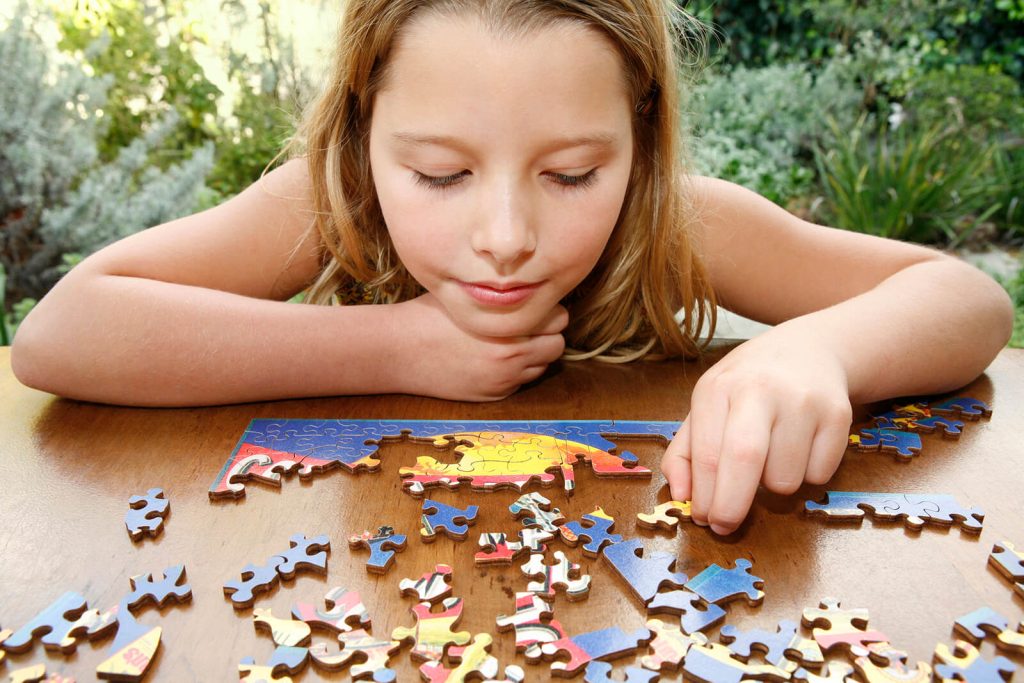
Jigsaw puzzles represent another staple of the puzzle genre that promotes problem-solving skills uniquely. As adults manipulate pieces to achieve the final picture, they develop not only patience and perseverance but also critical spatial awareness. This skill is particularly beneficial in fields such as engineering, architecture, and design, where understanding how individual components fit together holistically influences the success of a project.
Moreover, the social aspect of completing jigsaw puzzles can enhance teamwork skills. Engaging in group puzzle-solving fosters collaboration and communication, driving adults to express their ideas and strategies openly. This synergy not only leads to a more enjoyable experience but can also result in innovative solutions borne from the diverse input of team members.
Combining Puzzle Skills for Enhanced Cognitive Function
Ultimately, the diverse realm of puzzles offers adults a rich tapestry of cognitive benefits. As players navigate through distinct challenges, they cultivate a well-rounded skill set that enhances problem-solving capabilities. This combination of abilities—critical thinking, verbal acuity, patience, and spatial awareness—serves as a comprehensive foundation upon which individuals can tackle a variety of daily challenges, both personally and professionally. Regular engagement with puzzles empowers adults to continually sharpen their problem-solving skills, leading to improved performance across all facets of life.
DIVE DEEPER: Click here to uncover the link between mind games and memory enhancement</p
Conclusion: Elevating Problem-Solving Skills Through Puzzle Engagement
In conclusion, the exploration of how puzzles enhance problem-solving skills in adults reveals a profound relationship between cognitive challenges and mental agility. Engaging with various types of puzzles—from logic puzzles that sharpen critical thinking, to crosswords that expand vocabulary and knowledge, and jigsaw puzzles that develop patience and spatial awareness—provides a comprehensive toolkit for enhancing problem-solving abilities.
By embracing these intricate forms of play, adults not only amuse themselves but also cultivate essential skills that translate seamlessly into real-world applications, such as effective decision-making in the workplace and confident communication in personal interactions. As research highlights the cognitive benefits of regular puzzle-solving, including improved memory, enhanced reasoning, and increased creativity, it becomes evident that investing time in these activities can significantly enrich one’s life.
Moreover, the social aspect inherent in many puzzles, particularly jigsaw puzzles, fosters collaboration and teamwork, which are invaluable in today’s interconnected environments. Through shared problem-solving experiences, adults can glean new perspectives and innovative solutions, underlining the importance of community in personal cognitive development.
Ultimately, the habit of engaging with puzzles offers a straightforward yet powerful means to elevate cognitive function, improve resilience, and enhance overall problem-solving skills. As we navigate the complexities of modern life, dedicating time to puzzles may just be the key to unlocking our full potential.
Related posts:
How Strategy Games Enhance Planning and Forecasting Skills
Developing Logical Thinking Through Crossword Puzzles
The Influence of Puzzle Games on Improving Concentration and Focus
The Importance of Logic Games in the Development of Cognitive Skills in Children
The Role of Digital Puzzles in Stimulating Critical Thinking Skills
The Impact of Simulation Games on the Learning of Social and Cognitive Skills

Linda Carter is a writer and puzzle expert specializing in mind games, brain teasers, and cognitive challenges. With extensive experience helping individuals enhance their problem-solving skills and think critically, Linda shares her knowledge on our platform. Her goal is to empower readers with practical advice, engaging puzzles, and strategies to sharpen their minds and achieve success in the captivating world of mind games and puzzles.