The Mathematics of Puzzles: How Numbers and Logic Help in Problem Solving
The Allure of Puzzles and Their Hidden Benefits
Puzzles have captivated minds for centuries, transforming mere entertainment into an engaging way to enhance problem-solving skills. They capture our attention by engaging our cognitive processes and challenging us to think outside the box. With each twist and turn of a jigsaw piece, or every logical deduction made in a brain teaser, there lies an opportunity to unlock new levels of mental agility.
At the core of many puzzles is a foundation of mathematics and logic that can help us understand complex situations and think critically about problems we encounter in our daily lives. For instance, consider the popularity of Sudoku, a number placement puzzle that has taken the world by storm since its revival in the 1980s. The grid format requires not just familiarity with numbers but a strategic approach to ensure that each row, column, and region contains all digits from one to nine without repetition.
Mathematical Foundations in Puzzles
Moreover, logic puzzles, such as those found in newspapers or apps, stimulate the brain by requiring the solver to use deductive reasoning to connect clues and reach a conclusion. The intrigue lies in the challenge of piecing together disparate pieces of information, often leading to a rewarding “Aha!” moment when the solution becomes clear.
Here are some key areas where numbers and logic play a vital role:
- Pattern Recognition: Successfully identifying sequences within puzzles is crucial. This skill extends beyond puzzles, influencing everything from recognizing trends in stock market data to spatial reasoning in architectural design.
- Critical Thinking: Engaging with logic puzzles promotes intelligent deductions that can improve decision-making in high-stakes scenarios. Businesses often use strategic games or simulations to foster critical thinking among their employees, contributing to an effective workplace.
- Quantitative Skills: Arithmetic proficiency is not only beneficial for solving numerical puzzles but also plays a vital role in everyday tasks, such as budget management or event planning. The ability to calculate and forecast can lead to better financial decisions.
The Broader Impact of Puzzle-Solving
As we delve deeper, we explore various mathematical principles that underpin these fascinating challenges. For instance, understanding combinatorics can enhance performance in games such as poker, where calculating probabilities and risks is essential. By embracing the logic behind puzzles, enthusiasts can hone their analytical abilities and improve their cognitive skills, which can be applied in both personal and professional realms.
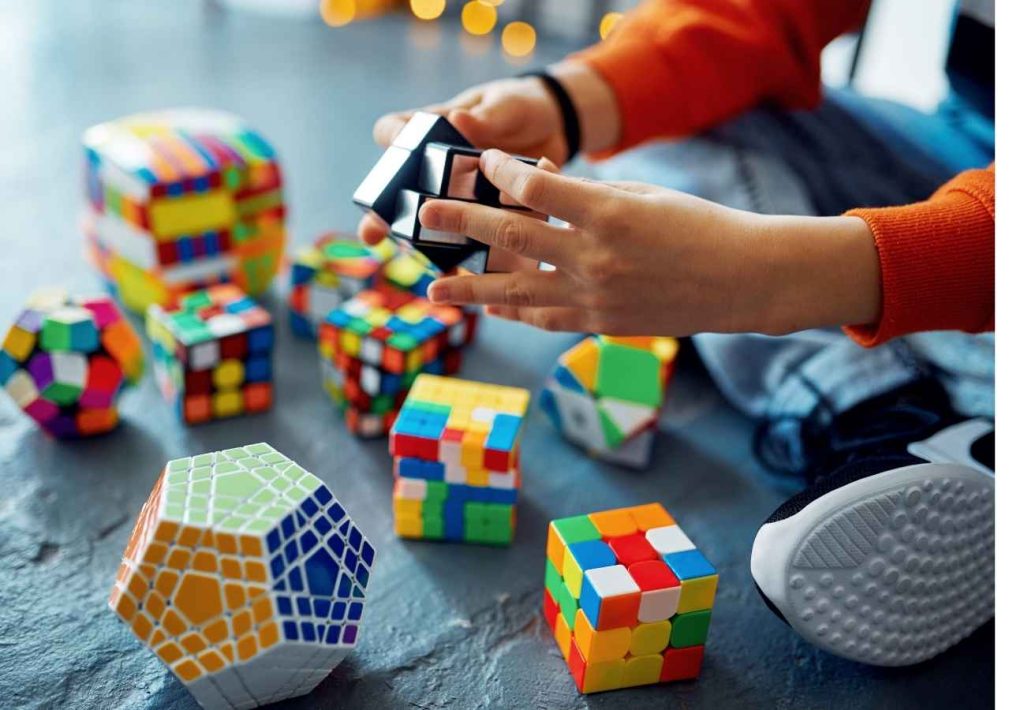
Ultimately, the exploration of puzzles reveals not just the joy of solving them but also their practical applications in everyday life. From developing stronger logical reasoning to enhancing creative thinking, puzzles teach us that the journey through numbers and logic is more than just a game. Encouraging a culture of puzzle-solving can foster an environment of continuous learning and adaptability, crucial traits for navigating our fast-paced world.
In a society where critical thinking is invaluable, embracing puzzles can be an engaging method to cultivate these skills. So the next time you confront a challenging riddle or an intricate Sudoku grid, remember: it’s not just a pastime, but a pathway to unlocking your mind’s potential.
DIVE DEEPER: Click here to learn more
Diving into the Numbers: The Mathematical Backbone of Puzzles
At the heart of many puzzles lies a rich tapestry of mathematical concepts that not only enhance our understanding but also sharpen our skills in problem-solving. Mathematics provides a language that transcends cultural and linguistic boundaries, allowing us to organize our thoughts and apply them to a variety of scenarios. Puzzles contribute to this mathematical dialogue, helping solvers practice and refine their skills in a playful yet challenging manner.
Consider how puzzles often necessitate the use of logical sequences and systematic approaches to reach solutions. For instance, in a classic logic puzzle involving a grid format, such as the ever-popular “Who Lives Where?” riddle, solvers must navigate through a web of clues using a logical framework to determine the placement of various entities. This not only fosters an understanding of the relationships between different pieces of information but also promotes structured thinking.
To further illustrate the impact of numbers and logic in puzzles, here are several key mathematical elements that enhance problem-solving skills:
- Probability Theory: Many games of chance, including card games or lottery puzzles, involve probabilities that require players to assess risks and outcomes. Understanding the basics of probability allows individuals to make informed decisions, whether betting on the likelihood of a favorable poker hand or trying to guess the winning lottery numbers.
- Geometry and Spatial Awareness: Puzzle enthusiasts often encounter forms and shapes that require an understanding of geometric principles. Jigsaw puzzles, for instance, ask solvers to visualize how various pieces fit together, enhancing spatial reasoning—an essential skill in fields such as architecture and engineering.
- Algebraic Reasoning: Puzzles that employ algebraic methods, like crosswords with numerical clues or mathematical riddles, encourage solvers to translate words into equations. This thinking pattern helps enhance problem decomposition and solution building, applicable in everything from academic work to professional strategy developments.
The influence of these mathematical principles goes beyond mere entertainment; they equip individuals with tools to navigate complex situations in everyday life. Whether it be determining the best route for a road trip by calculating distances or making data-driven decisions in business, the skills developed through puzzles persistently serve as valuable assets.
Moreover, the communal aspect of puzzle-solving shouldn’t be overlooked. Many puzzles, particularly those in competitive formats such as escape rooms or crosswords across cities like New York, foster collaboration. Team members must often work together, using their mathematical perspectives to piece together clues, ultimately reflecting both social and cognitive benefits of engaging with puzzles.
In essence, the world of puzzles is not merely a series of entertainment options; it represents a dynamic intersection of mathematics and logic that encourages critical thinking, creativity, and problem-solving. By delving into the mathematical underpinnings, we uncover a deeper appreciation for the challenge and satisfaction that puzzles can provide, prompting us to embrace their potential in our daily lives.
In exploring the fascinating intersection between mathematics and puzzles, one cannot overlook the significant advantages that arise from engaging in such activities. Puzzles not only serve as an entertaining pastime but also foster critical thinking and the development of logical reasoning skills. The intricate framework of numbers and relationships within various puzzles, such as Sudoku, logic puzzles, and mathematical riddles, provides a myriad of opportunities for problem-solving.When individuals tackle mathematical puzzles, they are invited to delve into a realm where analytical skills are essential. This practice enhances cognitive abilities, promoting sharper thought processes that can be directly applicable to everyday situations. Engaging with these puzzles often leads to an improvement in one’s ability to identify patterns, a fundamental aspect not only in mathematics but also in various fields like science, technology, engineering, and even economics.Furthermore, puzzles require a unique blend of creativity and focus. The process of temporarily stepping away from conventional methods to solve complex problems encourages lateral thinking. This approach allows individuals to devise innovative solutions, breaking free from traditional constraints. By enhancing problem-solving skills through the enjoyment of puzzles, individuals are equipped to navigate personal and professional challenges more effectively.The act of working through mathematical puzzles can also lead to improved perseverance. The iterative process of trial and error cultivates resilience, teaching individuals to approach problems from multiple angles until a solution is found. This tenacity is invaluable, especially in high-pressure environments where effective decision-making is crucial.In summary, the mathematics of puzzles offers an engaging avenue for enhancing problem-solving capabilities. Through the strategic interaction with numbers and logic, participants invariably bolster their analytical skills, creativity, and resilience. The journey of unraveling puzzles not only nourishes the mind but also prepares individuals for the complexities of real-world problem solving.
DISCOVER MORE: Click here to dive deeper
Unlocking Patterns: The Role of Combinatorics and Statistics in Puzzles
As we delve deeper into the fascinating world of puzzles, we cannot overlook the significance of combinatorial mathematics and statistics. These branches of mathematics provide essential tools for puzzle enthusiasts, enabling them to identify patterns, formulate strategies, and ultimately reach solutions. By mastering the fundamentals of combinatorial reasoning and statistical analysis, solvers can enhance their capacity for critical thinking and decision-making.
Combinatorics, the study of counting, arrangements, and combinations, comes into play in various types of puzzles. Take, for example, Sudoku—a number placement game that requires the solver to fill a grid while adhering to specific numerical constraints. Understanding how many possible configurations exist for a given grid can greatly influence one’s approach to solving the puzzle. Recognizing that the problem can be viewed through the lens of permutations and combinations allows solvers to simplify complexities and focus on viable solutions.
Additionally, the power of statistics is indispensable in navigating probability-driven puzzles. For instance, in card games such as Blackjack, players must evaluate their chances of winning based on the visible cards and the known deck composition. They employ statistical reasoning to determine optimal moves, balancing risk and reward. Understanding concepts such as expected value, which calculates the average outcome of a series of decisions, can guide players toward more strategic plays.
Moreover, the relationship between mathematical modeling and puzzles cannot be overstated. Puzzles can often be framed as real-world scenarios where data is needed to make informed decisions. For example, in optimizing routes for delivery services, companies can create mathematical models to identify the best paths considering traffic patterns, delivery time, and distance. This approach mirrors the logic applied in puzzles, where one must evaluate various constraints to solve the problem efficiently.
Another notable example is the emergence of data puzzles within the fields of big data and data science. These puzzles challenge individuals to analyze large datasets, identify trends, and derive insights through methods such as regression analysis and clustering techniques. This not only sharpens analytical skills but also prepares individuals for careers in data-intensive industries where problem-solving is critical.
The integration of technology into puzzle-solving is also notable. With the advent of mobile apps and websites dedicated to mathematical challenges, enthusiasts can now access a plethora of puzzles that incorporate advanced mathematical concepts. Platforms like Brilliant.org and Khan Academy offer interactive experiences that fuse mathematics with logical reasoning, allowing users to tackle complex puzzles at their own pace while receiving real-time feedback.
In educational settings, puzzles serve as effective teaching tools by promoting engagement and enhancing learning outcomes. Mathematics educators often use puzzles to help students grasp abstract concepts, transforming traditional learning into an engaging experience. By solving intricate problems in the form of puzzles, students develop confidence in their mathematical abilities as they build a foundation for logical reasoning—skills that will pave the way for their future academic and professional pursuits.
DIVE DEEPER: Click here to discover more about the mental health benefits of puzzles
Final Thoughts on the Integral Role of Mathematics in Puzzles
In conclusion, the exploration of mathematics within the realm of puzzles reveals not only the intricate beauty of numbers but also their profound application in everyday problem-solving. By embracing concepts such as combinatorics, statistics, and mathematical modeling, enthusiasts can refine their logical thinking and enhance their ability to navigate complex challenges. The transformation of mathematical principles into engaging puzzles illustrates the capacity to foster critical thinking skills—skills that are essential in both academic and professional settings.
The rise of interactive platforms and educational resources further emphasizes the importance of puzzles as effective learning tools. As students engage with puzzles, they cultivate a sense of curiosity and confidence, equipping themselves with the problem-solving prowess necessary for various fields, from data science to logistics.
Moreover, understanding the patterns and strategies embedded in puzzles nurtures a mindset that embraces challenges as opportunities for growth. Whether through board games, mobile applications, or classroom exercises, the interplay of logic and numbers not only makes learning enjoyable but also prepares individuals for a future where analytical thinking will be a critical component of success.
As we continue to explore the mathematics of puzzles, it becomes evident that the journey is not solely about finding solutions but rather about developing a deeper appreciation for the logical framework that underpins the world around us. So, whether you are a seasoned puzzle master or just beginning your journey, remember that each puzzle holds an opportunity for discovery and mastery of the intricate world of mathematics.
Related posts:
Developing Problem-Solving Skills Through Classic Puzzles
How Strategy Games Can Enhance Mental Agility and Problem-Solving
Puzzles and Education: How Riddles Can Stimulate Critical Thinking in Children
Unraveling Mysteries: The Art of Solving Puzzles and Mental Challenges
Exploring the Logic of Escape Games: Strategies for Real-Time Problem Solving
The Influence of Word Games on the Improvement of Problem-Solving Skills

Linda Carter is a writer and puzzle expert specializing in mind games, brain teasers, and cognitive challenges. With extensive experience helping individuals enhance their problem-solving skills and think critically, Linda shares her knowledge on our platform. Her goal is to empower readers with practical advice, engaging puzzles, and strategies to sharpen their minds and achieve success in the captivating world of mind games and puzzles.